-
Anatomy of a Scene
This week I viewed two films to assess the way cinematographers and filmmakers create and pace films with rhetoric and other clever ways to win you over scene by scene. The first film I would like to address in this discussion would be Rebecca, a film presented by Sleznick International a little over eighty years ago in 1940, also starring some iconic names in Hollywood such as Joan Fontaine, Laurence Oliver, and Judith Anderson. The film is recognized in large for its intense dramatic sequences involving the entanglement of an eccentric and wealthy man Max, and a personal companion Caroline, working under a very high-class lady. The plot moves quite quickly as the movie progresses from scenes where Max and Mrs. Danvers meet in the Monte Carlo, to being married and driving home from their honeymoon in a sequence of scenes that spans no more than 4 minutes. While that is abnormal to transition through such key developments, the film handles these gaps tremendously as the marriage continues, revealing the deep secrets and drama that this movie really conveys subliminally. From how the scenes are designed to the lighting, this film tells a story from your eyes, not your ears.
The second film I watched this week to get a feel for how cinematographers and film makers create a vision for a scene was a beautifully written movie presented by Paramount, Smoke Signals is a film that released in 1998, featuring Adam Beach, Evan Adams, and Gary Farmer. The film starts with a native American medicine man-like speech detailing subliminally the events leading into the introduction to the plot where the viewer is then introduced to the cast of characters, Victor, a young Native American living on a reservation in high school, and Thomas, also a young Native American boy, and a whole slew of characters that have varying importance throughout the film. While the movie tries to take a serious tone with some very tense family drama and outright dark themes varying from alcoholism, racism, and domestic abuse. However, the script has quite a bit of very dry humor attached to it at almost every angle to lighten the mood. A great scene this takes a very large part of the vision in my opinion is when Victor and Thomas meet Suzy Song after travelling to Phoenix from their reservation by bus. Thomas and Victor make this trip due to the death of Victor’s father, Arnold who left Victor when he was just 12. With some apparent emotional trauma, Victor handles most confrontation surrounding the situation of his father’s death with a little bit of aggression throughout the journey, while Thomas on the other hand, sees Victor’s father as a role-model and someone to look up to, thus causing him to light up the room with stories and memories/exaggerated memories of Arnold. These clashing ideas of Victor’s father create some resoundingly good tension points to keep you interested throughout the relatively bland journey by greyhound bus. Finally, after making their way to where Arnold was living when he died, they meet Suzy Song, Arnolds next door neighbor and life partner after Victor and his mother were abandoned by Arnold. The scenes that transpire from this meeting explains immense details of the story through vague conversation between Suzy and Victor regarding how the fire that killed Thomas’ parents and nearly killed Thomas and Victor was started by Arnold himself on accident while drunk. This conversation takes place after Thomas had passed out earlier in the evening. Furthermore, the scene not only supports this plot point with extremely well-acted conversation pieces with tense moments, but the film also does a wonderful job of sequencing memories, or flashback sequences that seamlessly flow back to the main plot, and in these flashback sequences, they reveal incredible detail that one party wouldn’t have known giving the viewer a whole different perspective to the way the characters portray themselves in the movie. Finally, I feel the film makers that developed this movie used camera angles and well-placed lighting to tell the viewer bits of the story before they are told in a way. An example of this would be right after the scene I have analyzed above, Arnold says in monologue regarding the day he left his family in Idaho, “I broke three hearts that day,”, and this is at first shocking to the viewer as the movie does a great job of indicating that Victor is an only child, and Victor’s mother was the only other person in the house. However, the camera immediately changed to a sleeping Thomas, subliminally telling the viewer who the third heart was.
In conclusion, I feel these movies both in their own ways show how developing a scene or a plot for a movie is so much more than just the script and the writers. Its everything from the types of lights used, to the way the camera changes scenes to tell the viewer something. Film is a fantastic media to express ones feelings and thoughts.
-
Photographer’s Eye
In recent reflection regarding the use of photos to tell a story, or the use of a collection of photos invoke an emotional response from a viewer, I have come to realize there are quite a few different ways to connect photos together, as its all in the eye of the beholder, so to speak. In this essay, I will be detailing the collection of photos I have gathered and compiled recently to show the message behind the visuals.
I’d first like to start with recognizing the collection of photos I have gathered represent the growth of my living situation over the past few years through the development of my personal hobbies, such as bowling, audio production, gaming, and tabletop gaming, with a sprinkle of flavor from my pets and family to round out what living is all about for me.

This is my workstation, I do a majority of my schoolwork, and also spend quite a bit of my free-time here as well producing music, playing video games, or communicating with other developers or gamers across the internet with services and apps like Discord. This photo represents the moment when I finally got an ideal production keyboard and invested in a standing desk to stay ergonomically sound through most of my idle time. 
I also happen to love cooking! This photo was taken on Christmas day when I received a cookbook with recipes from my favorite MMORPG Final Fantasy XIV! I added it to the collection simply due to the amount of times I use these recipes weekly. 
Another photo from Christmas! Bowling is one of the hobbies I partake in weekly, and felt adding a picture of my ball to the list would add merit to the collection as I want these photos to represent what I love to do in life. 
I must include the lights of my life, my cat Dexter, and my dog Peanut are extremely important to me in terms of my day to day life. 
Finally, as a semi-professional musician, I find quite a lot of my time is spent noodling away on my 8-string guitar, or playing with digital effects processing via the Axe-FX II. In conclusion, I fell there are many wildly different ways a photographer can project a visual claim without using words, and only photos. I feel it speaks volumes to the way humans interpret and process information from photos. Thank you for reading.
-
Poetic License
When I think deeply about poetry and the literary devices used to convey complex thoughts in a very stylish fashion, one such poem that comes to mind is, ‘Swallowtails’ by Allan Peterson. I believe this poem jumps out at me due to its usage of personification throughout the poem, while also explaining some valuable lessons of life.
To start, I observed the poem starts by exclaiming metaphors to times changing as they pass rapidly, in lines like, “He told them eventually time would run backwards in their hands, now empty where a crossbow went.” (Line 8-9). The author is giving a detail to how life could change for those in the ‘empire’ alluded to prior in the poem. I believe the author is trying to explain in this poem that we may not be often stuck in the same positions we are now, (the soldiers not needing a crossbow anymore would indicate such things as well, but there are more lines that reference such a thought). To further represent this logic, the author uses an analogy of waiting for time to change on Mexico Beach, while comparing it to all of the soldiers in the afterlife ‘waiting’ underground in China. The author in my opinion uses a majority of this poem as a metaphor to a rapid and always changing challenge in life.
Finally, when I think about what message to take home when thinking about this poem, I cant help but think it is a great example of why not to stress about some things in life, as things can change quickly, and you might not always be in the same situation for long.
Swallowtails
The Emperor thought of his heart as a water wheel
flooding the rice fields of all creation
and bloodied the water for a better harvest.
His warriors hoped for a life with wings.
His swallowtails wrote him the same lines
—the secret of life is a resurrected worm—
He told them eventually time would run backwards
in their hands, now empty where a crossbow went.
A theory works if it answers the exceptions.
The writing in the air of swallowtails,
from here to where the time changes at Mexico Beach,
is like writing all the armies of the afterlife
waiting underground in China.
We are attuned to shadows. They strafe the shore.
An osprey spins above the trees.
But when a large one stops suddenly above the house,
all the laws have been broken.
A theory that a moment is a warehouse where armies are stacked
to the ceiling, then one falls, is the last exception.
The osprey’s underside is streaked like a zebra swallowtail.
It misses the fish that dove out of the reach of shadows
as the lovers jumped into theirs from the Bay Bridge to Fort Walton.
If any should meet hovering over a milkweed or reflection,
they might say didn’t I know you in another life,
the kind of thing said often in Fort Walton or the Orient
and didn’t plum blossoms freeze in the Emperor’s courtyard.
-
Representative Work
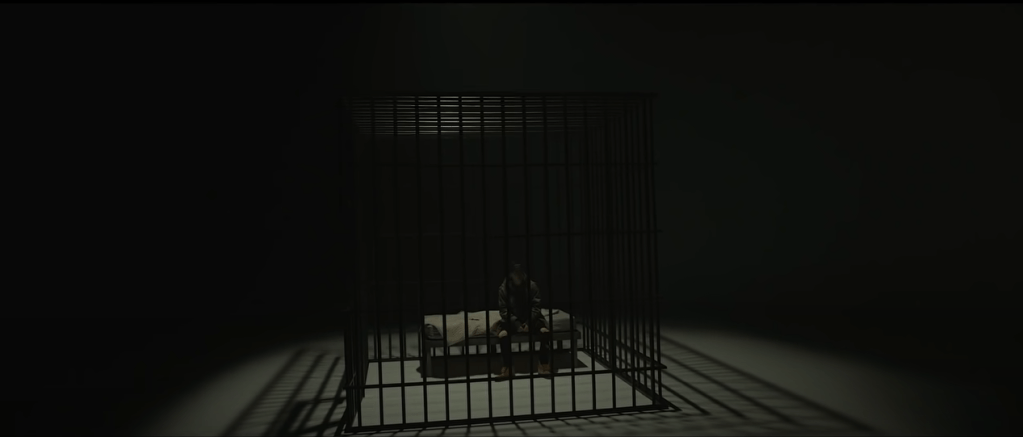
When I think about art as a whole and specifically what works of art represent the way I think and feel, I cannot help but immediately think of the musician NF and their music. NF’s work is rife with deep emotional hues scattered throughout the lyrics, allowing those with similar or identical personal insecurities to sympathize and rally behind the message being presented. The song “Outcast” composed by NF, is a wonderful example of exactly what type of message the artist is trying to present, which is the idea that being alone, or an outcast should not change the outcome of your goals, or life choices, this message is being displayed while also being kept interesting by dark and mysterious musical hymns and almost, story-like description of feelings and the process NF has gone through with those feelings. I personally resonate with the messages and musical themes being portrayed in every song by NF, however I do believe this work I connect with more due to the representation in the lyrics of having the keys in your hands to open the cell you are trapped in. Another incredibly major part of the work is the demeanor or style of which this type of hip-hop takes shape as, the music style is very aggressive at times, but the message being portrayed is one of personal resilience and resolve. These factors allow NF to dig very deep into himself to present a story of perseverance through mental illness, insecurity, depression, and other typically underrated ailments everyone goes through on a day-to-day basis. Furthermore, this piece of art in my opinion uses very powerful descriptions and positions on the idea of being alone to breed a sense of familiarity with those listening, to those resonating internally with these issues. Finally, I respect and appreciate this piece of art, and the artist, NF for keeping a message like this extremely powerful, and healthy while also keeping the music entertaining and engaging.
Link to video here: https://www.youtube.com/watch?v=J7MYJ8Kxhwc
-
Hello World!
Hello, I am Robert Simons, Lets have a wonderful Semester!
-
Subscribe
Subscribed
Already have a WordPress.com account? Log in now.
 My blog